
From the Farm to the Kitchen: A Simple Ayurvedic Meal
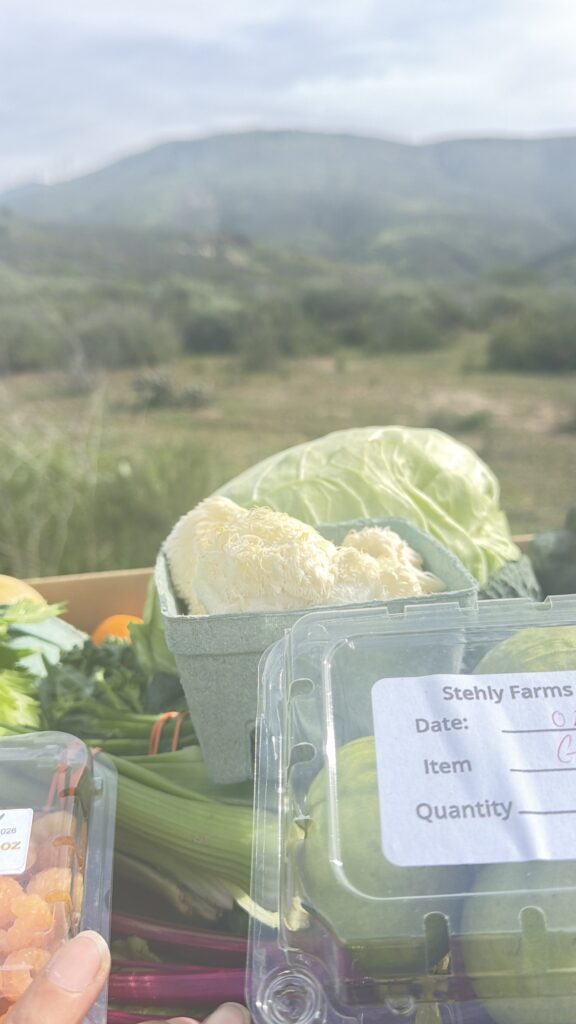
There is something that shifts when food comes directly from the land.
Recently I visited Rancho Milky Way and brought home a few simple ingredients. Nothing elaborate—just fresh vegetables, grown with care. Being in that space reminded me that food is not just something we buy. It is something we receive, prepare, and experience. I went into the kitchen and cooked.
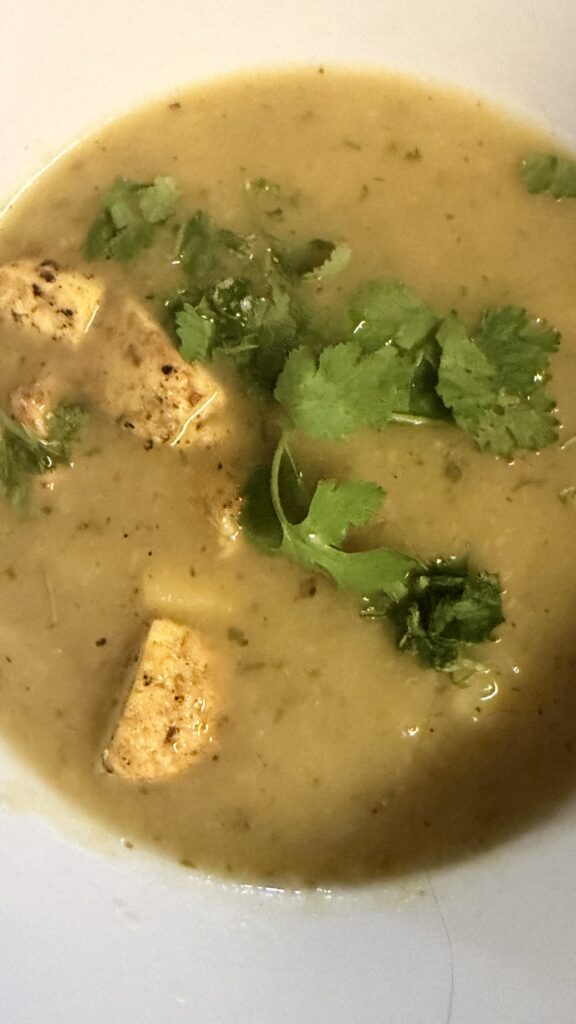
Potato & Leek Soup (Farm-Inspired)
I began by warming a little ghee in a pot. Once warm, I added the spices coriander, fennel, cumin, a touch of black cumin, and turmeric and let them cook gently for a moment, just until their aroma began to release.
Then I added the sliced leeks, allowing them to soften slowly and absorb the flavors.
Next came the potatoes, fresh from the farm, along with a pinch of salt and a little black pepper. If I had taro root, I would have used that as well it would have brought an even deeper earthiness to the dish.
I covered everything with water or vegetable broth and let it simmer gently until the vegetables were soft, then blended it into a smooth, warm soup.
To Serve
For my bowl, I kept it simple but nourishing.
I added fresh paneer and a handful of chopped cilantro, and served it with warm naan on the side.
The naan was made with a mix of fresh-milled einkorn flour, barley flour, and organic whole wheat flour.Everything was warm, soft, and deeply satisfying—exactly what the body needs.
Why This Is Ayurvedic
This meal reflects a few simple Ayurvedic principles. Cooked, warm food is easier to digest and supports agni, the digestive fire. The use of spices like cumin, coriander, and fennel helps the body process food more efficiently, while ghee nourishes and carries those qualities deeper into the tissues. Fresh, local ingredients contain more prana, or life force, which is essential for true nourishment. Most importantly, this meal was prepared with attention and simplicity.
Ayurveda is not about complicated recipes. It is about learning how to work with what you have, in a way that supports balance.
Why This Meal Is Good for Spring
In Ayurveda, spring is a time when the body naturally begins to release what has accumulated during winter.
This can show up as a sense of heaviness in the body, slower digestion, or congestion. You may also notice feeling more tired than usual, having difficulty concentrating, or catching colds more easily.
These are natural signs that the body is moving out of winter and beginning a process of clearing and renewal. Meals like this help support that transition.
Leeks are light and help clear stagnation, while the spices gently awaken digestion without being too strong. Turmeric supports cleansing and circulation, and warm, blended soups are easier for the body to process. Even though potatoes are grounding, the way they are prepared; warm, soft, and spiced makes them supportive rather than heavy.
A Simple Reminder
You don’t need to change everything at once.
Start with one meal.
One ingredient.
One moment of awareness in the kitchen.
Spring is a time to gently reset; to lighten, to clear, and to come back into balance. Sometimes, the simplest meals are the most healing.
WHEN THE BLOOD (RACKTA) CARRIES TO MUCH HEAT
When the Blood Carries Too Much Heat
Rakta (Blood), the Channels Carrying Heat, and How Ayurveda Meets You Where You Are
Many people experience headaches that come on suddenly, linger for days, or seem to appear around the same time each day, often late morning or midday. Sometimes they are mild and lingering. Sometimes they become full migraines with light sensitivity. Very often, they come together with tight shoulders, neck pain, or a feeling of pressure in the upper body.
From an Ayurvedic perspective, this is not random.
A very simple way to understand it
When the blood is overheated or carrying excess waste, the body becomes sensitive to light. Bright sunlight or strong artificial lights add more heat to an already hot system, and that extra heat rises to the head, causing headaches or migraines.
Or even simpler: Light is heating. If your blood is already hot, light becomes irritating instead of healing.This is why avoiding bright light during a headache is not weakness or avoidance. It is support.
Rakta, the blood, and why it matters
In Ayurveda, rakta dhātu, the blood tissue, is the second tissue formed after rasa dhātu, which nourishes and hydrates the body. If rasa nourishes, rakta enlivens. Rakta carries oxygen, vitality, color, clarity, and sharp perception throughout the body. It is closely connected to pitta, the principle of heat and transformation. Because of this relationship, rakta is especially sensitive to excess heat, inflammation, toxins, emotional intensity, overstimulation, and liver overload.
When rakta is balanced, circulation is smooth and perception is clear. When rakta becomes overheated or congested, pressure builds. That pressure often shows up as headaches, light sensitivity, burning sensations, irritability, skin issues, and tension in the upper body. This is why headaches are not only a problem of the head. They are often a rakta problem.
The liver, rakta, and accumulation over time
In Ayurveda, the liver and rakta are inseparable. The liver governs the quality and movement of the blood. It filters, transforms, and keeps circulation flowing smoothly.The liver does not only respond to what you did today. It carries what has been building for weeks and months.
For many people, late fall and winter include heavier foods, more sugar or alcohol, irregular eating, late nights, increased screen use, emotional stress, and less movement. Even when those habits change, their effects do not disappear immediately. The liver continues to process metabolic residue, inflammatory byproducts, emotional heat, and accumulated stimulation. Rakta carries that load throughout the body. By the time days get brighter, even if the weather is still cold, the system may already be full. The weather does not create the imbalance. It reveals what is already in the blood.
Cold, wind, and headaches
Yes, cold and air absolutely matter. Cold and wind aggravate Vata, the principle of movement. When cold air enters through the head, neck, ears, or shoulders, it causes contraction and stiffness.
Many headaches are mixed in nature. There is internal heat and congestion in rakta combined with external cold and wind. Cold does not always cool in a healthy way. Often it contracts and traps heat inside, increasing pressure that rises to the head. This is why people say the cold air gave them a headache. From an Ayurvedic perspective, that is accurate.
Why migraines are often light sensitive
Migraines with light sensitivity usually reflect rakta and pitta involvement. Excess heat in the blood dilates vessels in the head, and bright light overstimulates Alochaka Pitta, the aspect of pitta governing vision.
The result is throbbing pain, nausea, eye discomfort, and a strong desire for darkness. Headaches often worsen late morning or midday. Screens and sunlight feel unbearable. Darkness feels immediately soothing. This is not neurological weakness. It is rakta carrying too much heat upward. A traditional teaching says, if the liver is hot, the head will suffer.
Shoulder pain and rakta stagnation
Shoulder pain is very often part of the same pattern.
When rakta circulation is sluggish and the liver is congested, stagnation settles in the upper body. The shoulders, neck, and upper back become holding areas. People experience chronic tightness, heaviness, burning or aching pain that does not fully resolve with stretching alone. Stress and emotional load contribute, as the shoulders are a classic place where pressure and responsibility are held. Cold and wind worsen this by contracting tissue and trapping heat in the blood, leading to stiffness and restricted movement. Headaches and shoulder pain are often two expressions of rakta stagnation.
Craving, reward, and rakta
An important piece that often gets overlooked is craving. When rakta is overheated, congested, or under pressure, the body naturally looks for relief. That relief often shows up as craving. This is not a lack of willpower. It is the system trying to regulate itself. People may crave sugar, coffee, alcohol, spicy food, salty snacks, intense exercise, heat, or strong stimulation. These cravings begin as attempts at relief.
In the short term, they create a sense of reward. Sugar gives a lift. Coffee sharpens focus. Heat creates release. Intensity cuts through stagnation. The nervous system gets a brief sense of clarity. From an Ayurvedic perspective, rakta under pressure seeks movement and stimulation.
The challenge is that what feels relieving in the moment often adds more heat later. The reward becomes reinforcement. Rakta heats up again, pressure builds, and the cycle repeats. Ayurveda does not judge this. It reads craving as information. When rakta is supported and cooled, craving softens naturally. The body no longer has to ask so loudly.
Hot yoga, intensity, and the reward cycle
This is also why practices like hot yoga can feel so appealing when rakta is under pressure. The heat, sweat, and intensity create an immediate sense of release. Circulation increases, stagnation moves, and the nervous system resets. For a moment, there is clarity and relief.
From an Ayurvedic perspective, this makes sense. The challenge is that when rakta is already hot, repeated exposure to heat adds to the load. What feels relieving in the moment can become depleting over time. Fluids are drained, heat concentrates in the blood, and recovery becomes harder. This is why some people feel energized briefly after hot yoga, followed later by fatigue, headaches, shoulder tension, irritability, or light sensitivity.
No judgment at all for those who love hot yoga. Many people do, and many of us did too. With awareness, we learn how heat affects our own body and mind, and we choose what supports us best.
Why symptom-relief therapies feel so good
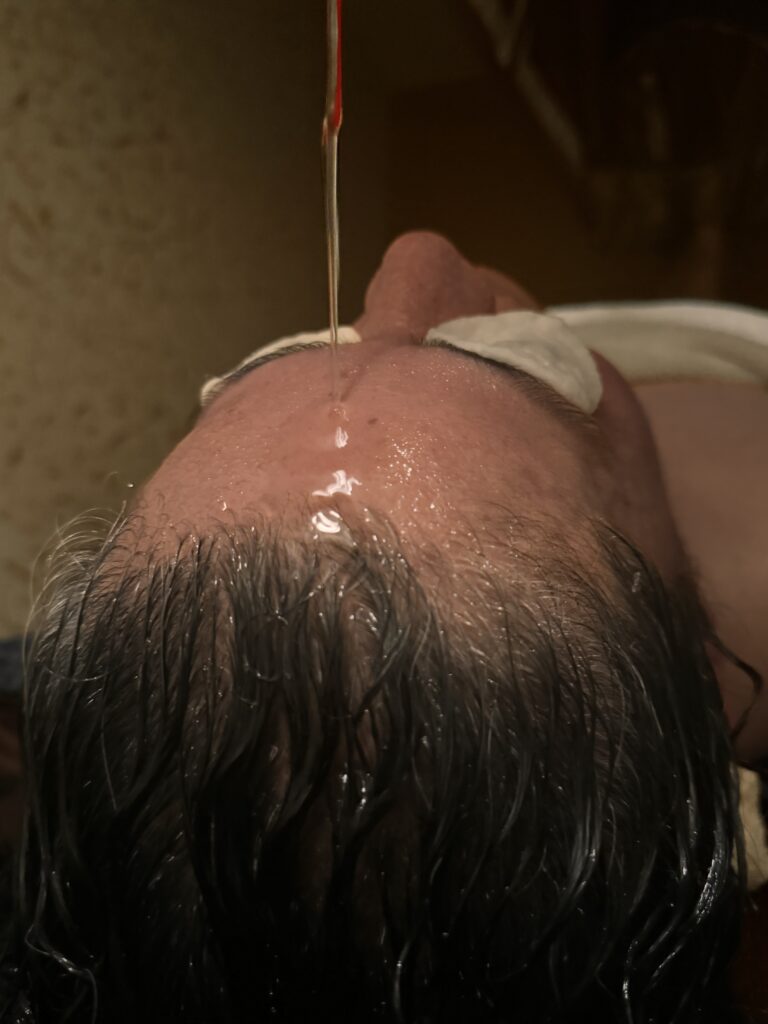
Many people naturally choose therapies that bring immediate relief, such as cupping, acupuncture, marma therapy, soothing baths, shiro abhyanga, shirodhara, bastis, and gentle bodywork.
These therapies help by moving rakta, releasing stagnation, dispersing trapped heat, calming the nervous system, and reducing pressure. In Ayurveda, they are called shamana therapies, meaning they pacify symptoms. That matters. When rakta begins to move, even temporarily, the body remembers what relief feels like. This alone can reduce suffering, fear, and exhaustion.
Relief and healing are not the same, and that is okay
Ayurveda is not fast medicine. Deep healing means gradually changing the quality of rakta, improving liver function, supporting digestion, restoring circulation, and regulating daily rhythm. For chronic patterns, this often takes years and consistent care.
In modern life, that level of consistency is not always possible.
Because of this, symptom relief is often enough for now.
Ayurveda is not all-or-nothing medicine. Relief allows the blood to breathe. Understanding allows change when the time is right. This is how Ayurveda meets you where you are.
A note on liver disease, including cirrhosis
In advanced liver conditions, the liver’s ability to filter, cool, and regulate rakta is impaired. Heat and waste remain in circulation longer than they should, and pressure shows up in sensitive areas such as the head, eyes, shoulders, and nervous system.
In these cases, symptom-relief therapies are not a compromise. They are appropriate care.
Ayurveda works alongside medical treatment, offering support for comfort, circulation, nervous-system regulation, and quality of life. Protection becomes more important than pushing.
A note of reverence for the liver: In the yogic tradition, the liver is not just an organ. It is a center of purification, transformation, and vitality. As my dear teacher Dharma Mittra often reminds us, the liver carries an enormous responsibility in the body. Because rakta depends on the liver, honoring the liver is also honoring the blood. When the liver is respected and not overburdened, rakta becomes clearer, cooler, and more fluid. When the liver is strained, the blood carries that strain everywhere. Healing does not always mean doing more. Sometimes it means honoring what already works so hard for us. When the liver needs protection, not pushing
In more complex or advanced conditions, Ayurveda shifts its role. The focus is no longer on fixing or forcing change, but on protecting what is still working. Cooling replaces stimulation. Support replaces strain. Symptom relief becomes wise medicine, not a lesser choice.
This is not giving up on healing.
This is practicing discernment.
This is Ayurveda meeting the body exactly where it is.
Questions about this, or anything else? Feel free to reach out.
With loving care,
Maria
To Bathe or Not to Bathe: Dryness, Depletion, and the Rasa of Life
By January, many people begin to notice dryness.
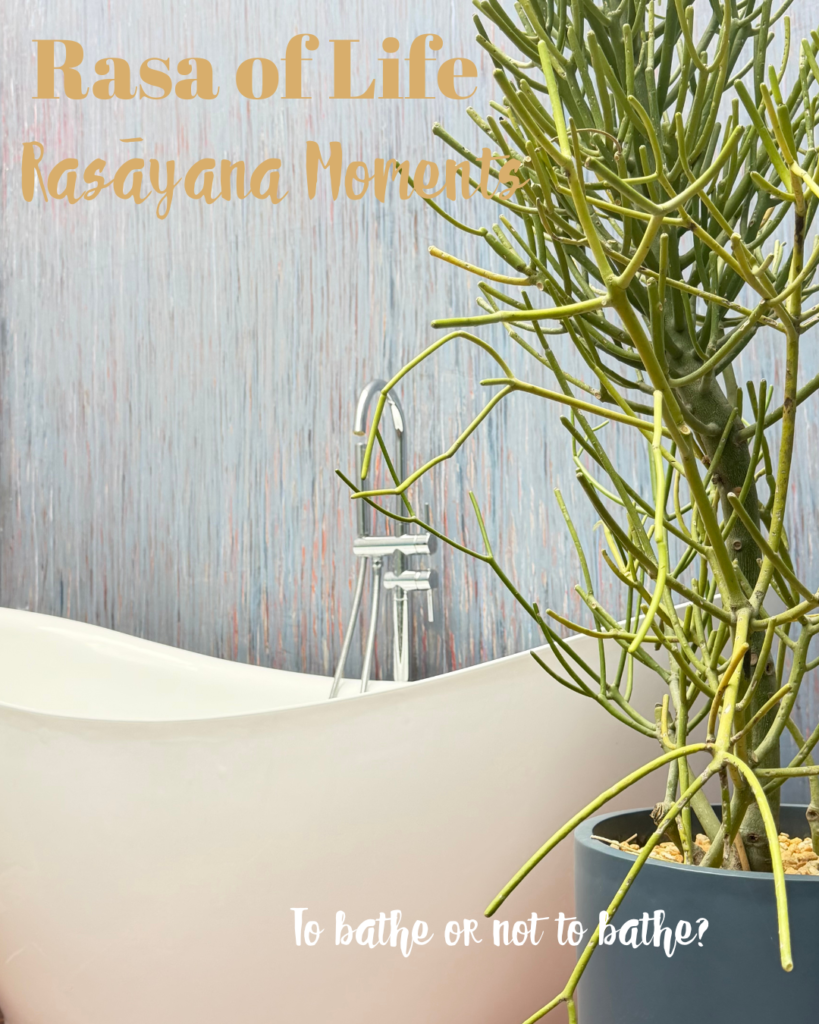
To Bathe or Not to Bathe: Dryness, Depletion, and the Rasa of Life
By January, many people begin to notice dryness. Dry skin. Dry lips. Dry joints. Dryness in the nervous system; restlessness, tension, headaches.
We often blame the weather. Or age. Or water. But dryness does not begin in the shower. Dryness appears when we are depleted.
The weeks surrounding the holidays are full; so much doing, so much giving, so much stimulation. Rich food, Irregular schedules, Travel, Late nights, Emotional intensity. The body keeps going, even when it cannot fully digest what is coming in. Not just food, but experiences.
Then the holidays pass. Life quiets. And that is when the symptoms begin to appear. From an Ayurvedic perspective, this timing makes sense. Depletion Is Living on Empty
Think of your body like a car. If you drive and drive without stopping for gas; or charging if it’s electric; eventually the system struggles. Not because the car is broken, but because it has not been replenished.
The same is true for the body. We give out constantly:going to work, preparing meals, caring for family tending to others holding emotional space and rarely do we pause to refill. Even moments meant for restoration are rushed. We shower, but we are thinking about what to do next. We bathe, but we are scrubbing the walls, planning, organizing. Water touches the skin, but attention never arrives. This is how depletion deepens.
What Is Rasa?
In Ayurveda, Rasa dhatu is the body’s first nourishment.
As taught clasical Ayurveda Rasa is formed from properly digested food and is responsible for hydration, immunity, emotional stability, and the nourishment of all tissues. When Rasa is healthy, the body feels supported, lubricated, and resilient. When Rasa is depleted, dryness and fatigue naturally arise.
Rasa is not just fluid; it is felt nourishment. It depends on warmth, rhythm, rest, and care. When Rasa is low, dryness appears not only in the skin, but in the mind and nervous system as well.
Why Symptoms Appear After the Holidays
Winter naturally increases Vata; cold, dry, constricting qualities. After weeks of rich food, irregular routines, and stress, circulation slows and downward flow weakens. Blood and energy can stagnate, especially in the upper body. This is why people experience: headaches pressure in the head, neck and jaw tension, mental fog, the head feels full and trapped; not because there is excess, but because flow is missing.
To Bathe Is to Receive
Ayurveda never taught that bathing is inherently drying. Cold, rushed, inattentive bathing can be depleting. But warm water paired with oil and presence is restorative. Abhyanga and warm bathing soften tissues, calm the nervous system, and support circulation; when they are done as moments of receiving rather than doing. This is not about adding another task. It is about restoring what has been given away.
Rasāyana: Preserving the Essence of Life
Ayurveda teaches that Rasāyana is not simply an herb or a treatment; it is a way of living that preserves the essence of life itself.
Rejuvenation does not come only from what we take in, but from how we live, how we rest, and how we receive care. Rasāyana includes daily habits, rhythm, awareness, and mental nourishment; not just substances. Rejuvenation is sustained by lifestyle, not shortcuts.
This is why multitasking through self-care does not restore us. We cannot replenish while rushing.
Rasa of Life: Rasa of Life is not about doing more. It is about pausing long enough to be nourished—
in body, mind, and spirit. Before we give out again. Before we return to work, meals, care, and responsibility. Just as we would never expect a car to run without fuel, the body cannot thrive without attention.
To bathe is not just to clean.
It is to receive.
This is how dryness resolves.
This is how vitality returns.
This is how the essence of life is protected.
✨ Rasa of Life · Rasāyana Moments
Questions about this, or curious how to support your body this season? Reach out.
With loving care,
Maria
Ayurveda & Yoga
The Importance of Cleansing Before the Cold Season

When Summer Heat Carries Into Winter
As the heat of summer begins to fade, our bodies carry subtle impressions of the season. Ayurveda teaches us that each season leaves behind qualities that, if not balanced, can accumulate and cause discomfort in the next cycle. This is why the transition from summer to winter is such a powerful time for cleansing and resetting.
When Summer Heat Carries Into Winter
Summer is ruled by pitta dosha; fire and water. Long days, sun exposure, spicy foods, and irregular routines can build up excess heat in the body. If this heat isn’t released before the colder months arrive, it gets “trapped” under the blanket of winter’s heaviness (kapha).
Imagine trying to light a fire under a wet blanket — the smoke gets stuck. In the same way, pitta heat suppressed by kapha heaviness can smolder beneath the surface and create imbalance.
Symptoms You May Notice
When summer’s heat isn’t cleared before winter, you might experience:
- Digestive disturbances → acid reflux, sluggish metabolism, bloating.
- Skin issues → rashes, redness, breakouts, dryness with irritation.
- Emotional irritability → frustration, low patience, mental restlessness.
- Respiratory congestion → as the cold/damp qualities of kapha combine with leftover heat.
- Fatigue & heaviness → a sense of being weighed down, low motivation.
Important to remember: If you’ve noticed that you often get skin flare-ups in the fall, or that you catch colds easily and feel heavy during the winter; it’s not “just the season.” It’s the leftover imbalance from the previous season that was never released.
THEN…

Beyond the Holidays: What We Carry With Us
Many people think that the winter holidays bring heaviness, depression, or low energy simply because of the season itself. But Ayurveda teaches us something deeper:
✨ It’s not always the season. It’s what was left behind.
When summer’s heat or fall’s dryness hasn’t been cleared, it lingers and combines with the weight of winter. That residue shows up as:
- Emotional heaviness or sadness
- A tendency toward depression
- Food cravings and overindulgence
- Mental fog and lack of motivation
The result is that holidays feel heavy, not joyful. Ayurveda explains this as seasonal carry-over unresolved doshas and toxins (āma- undigested food) that cloud both the body and the mind.
Life Stages & Seasonal Imbalance
This seasonal residue expresses itself differently depending on age and stage of life:
- Young people → painful menstruation, acne and breakouts, irritability, and poor concentration.
- Busy mothers and fathers → fatigue, burnout, palpitations, sleep disturbances, and emotional exhaustion from overwork.
- Those in menopause or perimenopause → hot flashes, night sweats, and mood swings intensify when the unprocessed heat of summer combines with hormonal changes.
- All ages → the holidays feel heavy, not joyful, as unresolved toxins cloud clarity and block vitality.
Ayurvedic Wisdom on Seasonal Transition
The sages were very clear about the dangers of carrying one season’s imbalance into the next:
- Charaka Saṃhitā
“Accumulation of doṣas in one season, if not eliminated, becomes aggravated in the following season and causes disease.” - Aṣṭāṅga Hṛdaya
“What is left undigested — whether food, emotion, or seasonal influence — turns into āma, obstructs the channels, and clouds both body and mind.”
Modern Ayurvedic Voices
- Dr. Vasant Lad reminds us:
“If seasonal impurities are not eliminated, the body’s agni becomes weak and āma accumulates. This leads not only to physical symptoms such as heaviness and congestion, but also to mental dullness; what we call brain fog.” - Dr. David Frawley emphasizes:
“The mind reflects the state of digestion. Just as physical toxins create heaviness in the body, mental toxins ; unresolved impressions, excessive sensory input, and seasonal residues; create fog, confusion, and loss of clarity.”
The Link to Mental Fog
When summer’s ( pitta ) heat is trapped under winter’s ( kapha ) heaviness, it does more than congest the body. It also clouds mind (sattva), the clarity of the mind. The result is:
- Difficulty focusing
- Sluggish thinking
- Emotional irritability mixed with fatigue
This is why many people say they feel “foggy” in winter — Ayurveda explains it as the body trying to process the old heat and toxins that weren’t released.
Why a Seasonal Cleanse Helps
Cleansing in early autumn offers the body a reset:
- Releases built-up heat → through light, cooling, and cleansing foods.
- Strengthens digestion (agni) → preparing your metabolism for the heavier foods of winter.
- Boosts immunity → clearing stagnation makes space for resilience during cold/flu season.
- Calms the mind → simple routines and sattvic foods bring clarity and peace.
Even a gentle 3-day reset with kitchari, digestive teas, abhyanga oil, and guided Yoga Nidra can transform how you enter winter.
Moving Forward With Balance
Ayurveda invites us to align with nature’s rhythm. By honoring the transition between summer and winter with a cleanse, we move into the colder months feeling:
- Grounded and nourished, not heavy.
- Calm and steady, not irritable.
- Clear and energized, not sluggish.
This is the wisdom of seasonal living; to reset before imbalance begins, so the body can thrive all year long
At Ayurveda Living by M.E., we now offer a 3-Day Seasonal Cleanse Box including meals, teas, ghee, self-care oil, and a guided Yoga Nidra practice; to help you welcome the new season with clarity and ease.
What Is a Basti? Ancient Healing for Modern Times
In Ayurveda, one of the world’s oldest healing traditions, basti means “to contain.” It is described in the Charaka Saṃhitā as the foremost treatment for balancing Vata dosha — the subtle energy that governs movement, circulation, elimination, and the nervous system.

Charaka writes:
“Just as a tree stands firm when its roots are nourished, the body thrives when Vata is balanced through basti.” (Charaka Saṃhitā, Siddhi Sthāna 1.25)
At Ayurveda Living by M.E., we carry this lineage forward with specialized basti therapies that nourish, release tension, and restore harmony to body, mind, and spirit.
How Does a Basti Work
Imagine a soft donut of dough placed on the body. A ring of flour dough is sealed to the skin, creating a little well. This “donut” is then filled with warm herbal oil or ghee, where it rests for 20–40 minutes.
- The warmth soothes stiffness and encourages circulation.
- The oils penetrate deeply into tissues (dhātus), softening dryness and restoring nourishment.
- The containment focuses the therapy while signaling safety and grounding to the nervous system.
Dr. Vasant Lad teaches that basti works on multiple levels:
- Physically: easing pain, stiffness, and inflammation.
- Energetically: opening the subtle channels (srotas).
- Emotionally: creating a sense of containment and peace — “like being held by the Earth itself.”
Benefits of Basti
- Relieves pain and stiffness in back, knees, neck, and joints
- Calms anxiety, fatigue, and nervous system imbalance
- Nourishes reproductive tissues and eases vaginal dryness (Yoni Basti)
- Supports circulation and emotional release (Hṛdaya Basti)
- Aligns energy along the chakras and spine (Pṛṣṭha/Chakra Basti)
- Refreshes eyes and relieves strain (Netra Basti)
Types of Bastis We Offer
- Kati Basti – Low back
- Janu Basti – Knees
- Griva Basti – Neck
- Hṛdaya Basti – Heart center
- Yoni Basti – Women’s health and nourishment
- Shiro Basti – Crown of the head
- Chakra Basti – Single chakra or all chakras together
- Pṛṣṭha Basti – Entire spine and chakra alignment
- Netra Basti – Eyes
NETRA BASTI

What to Expect
- You’ll be guided into a comfortable position.
- The dough “donut” is placed on the chosen area.
- Medicated oil or ghee is poured inside and held for 20–40 minutes.
Clients often leave feeling grounded, clear, and deeply restored.
- Acute conditions (pain flare-ups, dryness, exhaustion, palpitations): every 3–4 days.
- Chronic conditions (arthritis, menopause symptoms, nervous imbalance): once a week.
- Maintenance/prevention (seasonal reset, stress support): every 2–4 weeks after a series.
Bastis are most effective as a series of 3–5 sessions, allowing cumulative healing.
As Dr. Lad reminds us:
“Vata is like the wind. To calm the wind, we need steady, repeated nourishment and containment. Basti is that steadying hand for body and mind.”
Modern research helps us understand why basti feels so powerful:
- Warmth & Oil Penetration: Heat dilates capillaries, improving circulation and allowing oils to absorb through the skin into deeper tissues.
- Nervous System Reset: Warm, continuous application stimulates the parasympathetic “rest and digest” response, calming stress and anxiety.
- Joint & Tissue Support: Oils provide anti-inflammatory and antioxidant effects, soothing stiff or dry tissues.
- Psychological Containment: The gentle “holding” of the oil creates a sensory experience of safety and grounding, reducing hypervigilance and mental restlessness.
In this way, basti bridges ancient wisdom and modern science — providing both measurable physiological benefits and subtle emotional healing.
A Timeless Therapy for Modern Living
Whether you are seeking relief from pain, balance in women’s health, or a nervous system reset, basti offers a timeless therapy perfectly suited for today’s stress-filled world.
At Ayurveda Living by M.E., each basti is prepared with intention, using oils and herbs chosen specifically for your constitution and healing goals.
👉 Book your session today and experience the nourishment your body and spirit have been waiting for.

Ayurvedic Fall Cleanse | Free Discovery Call
Reset Your Energy This Fall with Ayurveda

Book a free 15-minute call to discover how an Ayurvedic Fall Cleanse can support your digestion, energy, and peace of mind.
Is This You?
As summer shifts into fall, many of us feel sluggish, heavy, or out of balance. Ayurveda teaches that this season is the perfect time to gently cleanse and prepare the body for renewal.
- ✨ Feel lighter, clearer, and more energized
- ✨ Support your digestion and immunity
- ✨ Restore calm and balance to your mind

What You’ll Get in Your Free Call
- 🌱 Quick insight into your Ayurvedic dosha
- 🍲 Simple seasonal tips you can use right away
- 🧘 Guidance on whether a cleanse is right for you

Meet Your Guide
Hi, I’m Maria; Owner of Chula Vista Yoga & Ayurveda Living by M.E. For over a decade, I’ve guided students and clients toward balance through yoga, Ayurveda, and self-care practices. This free call is a chance for us to connect personally; and for you to receive practical Ayurvedic support, whether you’re brand new or deepening your journey.

What Others Say
“After my cleanse with Maria, I felt lighter, calmer, and more energized. It was so simple but powerful.” – Laura G.
“Maria’s guidance helped me finally understand how food and rituals can change my health. I feel supported every step of the way.” – Ana S.
FAQ
Do I need to prepare anything?
No, just bring yourself and your questions.
Is this really free?
Yes! This call is a gift to help you explore Ayurveda and see if it feels right for you.
How does the call happen?
We’ll connect by phone or Zoom whichever is easiest for you.
Your Reset Starts Now
Don’t wait until the holidays to feel your best. Take 15 minutes for yourself today.Book My Free 15-Minute Call Now

© 2025 Ayurveda Living by M.E. | Chula Vista Yoga