
When the Blood Carries Too Much Heat
Rakta (Blood), the Channels Carrying Heat, and How Ayurveda Meets You Where You Are
Many people experience headaches that come on suddenly, linger for days, or seem to appear around the same time each day, often late morning or midday. Sometimes they are mild and lingering. Sometimes they become full migraines with light sensitivity. Very often, they come together with tight shoulders, neck pain, or a feeling of pressure in the upper body.
From an Ayurvedic perspective, this is not random.
A very simple way to understand it
When the blood is overheated or carrying excess waste, the body becomes sensitive to light. Bright sunlight or strong artificial lights add more heat to an already hot system, and that extra heat rises to the head, causing headaches or migraines.
Or even simpler: Light is heating. If your blood is already hot, light becomes irritating instead of healing.This is why avoiding bright light during a headache is not weakness or avoidance. It is support.
Rakta, the blood, and why it matters
In Ayurveda, rakta dhātu, the blood tissue, is the second tissue formed after rasa dhātu, which nourishes and hydrates the body. If rasa nourishes, rakta enlivens. Rakta carries oxygen, vitality, color, clarity, and sharp perception throughout the body. It is closely connected to pitta, the principle of heat and transformation. Because of this relationship, rakta is especially sensitive to excess heat, inflammation, toxins, emotional intensity, overstimulation, and liver overload.
When rakta is balanced, circulation is smooth and perception is clear. When rakta becomes overheated or congested, pressure builds. That pressure often shows up as headaches, light sensitivity, burning sensations, irritability, skin issues, and tension in the upper body. This is why headaches are not only a problem of the head. They are often a rakta problem.
The liver, rakta, and accumulation over time
In Ayurveda, the liver and rakta are inseparable. The liver governs the quality and movement of the blood. It filters, transforms, and keeps circulation flowing smoothly.The liver does not only respond to what you did today. It carries what has been building for weeks and months.
For many people, late fall and winter include heavier foods, more sugar or alcohol, irregular eating, late nights, increased screen use, emotional stress, and less movement. Even when those habits change, their effects do not disappear immediately. The liver continues to process metabolic residue, inflammatory byproducts, emotional heat, and accumulated stimulation. Rakta carries that load throughout the body. By the time days get brighter, even if the weather is still cold, the system may already be full. The weather does not create the imbalance. It reveals what is already in the blood.
Cold, wind, and headaches
Yes, cold and air absolutely matter. Cold and wind aggravate Vata, the principle of movement. When cold air enters through the head, neck, ears, or shoulders, it causes contraction and stiffness.
Many headaches are mixed in nature. There is internal heat and congestion in rakta combined with external cold and wind. Cold does not always cool in a healthy way. Often it contracts and traps heat inside, increasing pressure that rises to the head. This is why people say the cold air gave them a headache. From an Ayurvedic perspective, that is accurate.
Why migraines are often light sensitive
Migraines with light sensitivity usually reflect rakta and pitta involvement. Excess heat in the blood dilates vessels in the head, and bright light overstimulates Alochaka Pitta, the aspect of pitta governing vision.
The result is throbbing pain, nausea, eye discomfort, and a strong desire for darkness. Headaches often worsen late morning or midday. Screens and sunlight feel unbearable. Darkness feels immediately soothing. This is not neurological weakness. It is rakta carrying too much heat upward. A traditional teaching says, if the liver is hot, the head will suffer.
Shoulder pain and rakta stagnation
Shoulder pain is very often part of the same pattern.
When rakta circulation is sluggish and the liver is congested, stagnation settles in the upper body. The shoulders, neck, and upper back become holding areas. People experience chronic tightness, heaviness, burning or aching pain that does not fully resolve with stretching alone. Stress and emotional load contribute, as the shoulders are a classic place where pressure and responsibility are held. Cold and wind worsen this by contracting tissue and trapping heat in the blood, leading to stiffness and restricted movement. Headaches and shoulder pain are often two expressions of rakta stagnation.
Craving, reward, and rakta
An important piece that often gets overlooked is craving. When rakta is overheated, congested, or under pressure, the body naturally looks for relief. That relief often shows up as craving. This is not a lack of willpower. It is the system trying to regulate itself. People may crave sugar, coffee, alcohol, spicy food, salty snacks, intense exercise, heat, or strong stimulation. These cravings begin as attempts at relief.
In the short term, they create a sense of reward. Sugar gives a lift. Coffee sharpens focus. Heat creates release. Intensity cuts through stagnation. The nervous system gets a brief sense of clarity. From an Ayurvedic perspective, rakta under pressure seeks movement and stimulation.
The challenge is that what feels relieving in the moment often adds more heat later. The reward becomes reinforcement. Rakta heats up again, pressure builds, and the cycle repeats. Ayurveda does not judge this. It reads craving as information. When rakta is supported and cooled, craving softens naturally. The body no longer has to ask so loudly.
Hot yoga, intensity, and the reward cycle
This is also why practices like hot yoga can feel so appealing when rakta is under pressure. The heat, sweat, and intensity create an immediate sense of release. Circulation increases, stagnation moves, and the nervous system resets. For a moment, there is clarity and relief.
From an Ayurvedic perspective, this makes sense. The challenge is that when rakta is already hot, repeated exposure to heat adds to the load. What feels relieving in the moment can become depleting over time. Fluids are drained, heat concentrates in the blood, and recovery becomes harder. This is why some people feel energized briefly after hot yoga, followed later by fatigue, headaches, shoulder tension, irritability, or light sensitivity.
No judgment at all for those who love hot yoga. Many people do, and many of us did too. With awareness, we learn how heat affects our own body and mind, and we choose what supports us best.
Why symptom-relief therapies feel so good
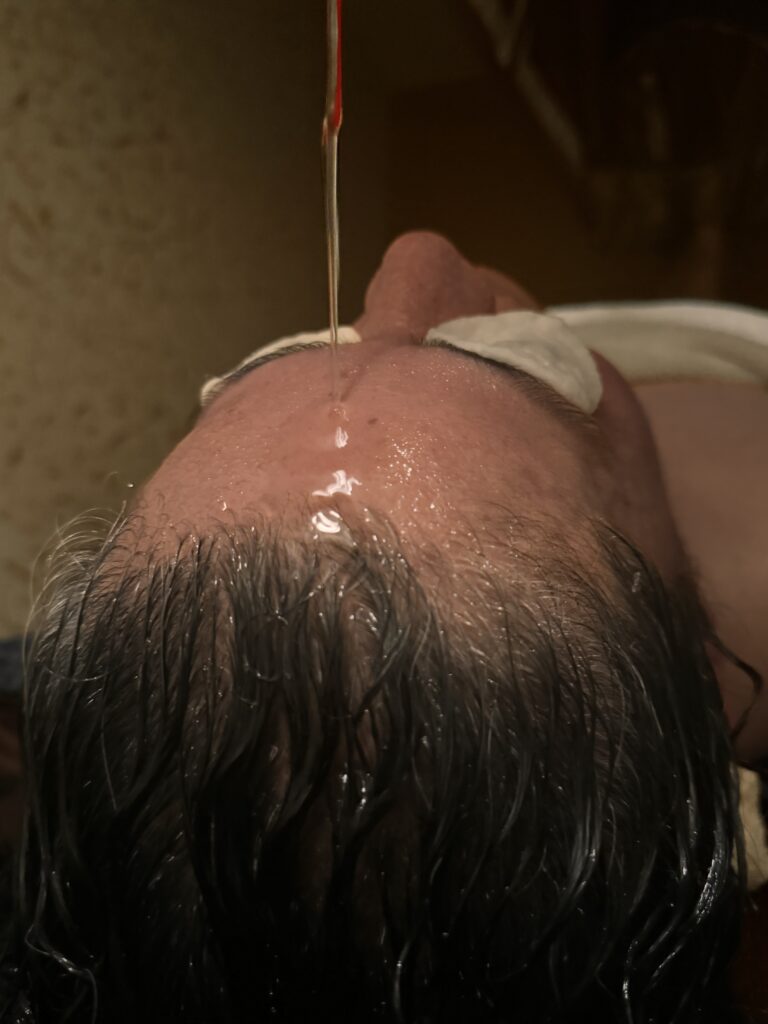
Many people naturally choose therapies that bring immediate relief, such as cupping, acupuncture, marma therapy, soothing baths, shiro abhyanga, shirodhara, bastis, and gentle bodywork.
These therapies help by moving rakta, releasing stagnation, dispersing trapped heat, calming the nervous system, and reducing pressure. In Ayurveda, they are called shamana therapies, meaning they pacify symptoms. That matters. When rakta begins to move, even temporarily, the body remembers what relief feels like. This alone can reduce suffering, fear, and exhaustion.
Relief and healing are not the same, and that is okay
Ayurveda is not fast medicine. Deep healing means gradually changing the quality of rakta, improving liver function, supporting digestion, restoring circulation, and regulating daily rhythm. For chronic patterns, this often takes years and consistent care.
In modern life, that level of consistency is not always possible.
Because of this, symptom relief is often enough for now.
Ayurveda is not all-or-nothing medicine. Relief allows the blood to breathe. Understanding allows change when the time is right. This is how Ayurveda meets you where you are.
A note on liver disease, including cirrhosis
In advanced liver conditions, the liver’s ability to filter, cool, and regulate rakta is impaired. Heat and waste remain in circulation longer than they should, and pressure shows up in sensitive areas such as the head, eyes, shoulders, and nervous system.
In these cases, symptom-relief therapies are not a compromise. They are appropriate care.
Ayurveda works alongside medical treatment, offering support for comfort, circulation, nervous-system regulation, and quality of life. Protection becomes more important than pushing.
A note of reverence for the liver: In the yogic tradition, the liver is not just an organ. It is a center of purification, transformation, and vitality. As my dear teacher Dharma Mittra often reminds us, the liver carries an enormous responsibility in the body. Because rakta depends on the liver, honoring the liver is also honoring the blood. When the liver is respected and not overburdened, rakta becomes clearer, cooler, and more fluid. When the liver is strained, the blood carries that strain everywhere. Healing does not always mean doing more. Sometimes it means honoring what already works so hard for us. When the liver needs protection, not pushing
In more complex or advanced conditions, Ayurveda shifts its role. The focus is no longer on fixing or forcing change, but on protecting what is still working. Cooling replaces stimulation. Support replaces strain. Symptom relief becomes wise medicine, not a lesser choice.
This is not giving up on healing.
This is practicing discernment.
This is Ayurveda meeting the body exactly where it is.
Questions about this, or anything else? Feel free to reach out.
With loving care,
Maria